

The Upstate Owner’s Handbook: Mastering Toyota Maintenance in Canandaigua and Rochester

Author: West Herr Toyota of Canandaigua
Rochester, and Brighton, the road throws everything at you—from lake-effect snowstorms on the Thruway to humid,
construction-heavy summers on Route 332. Your vehicle is not just a machine; it is your lifeline to work, school,
and exploring our beautiful state. Resources like the National Highway Traffic Safety Administration (NHTSA) and
J.D. Power can help you stay informed about vehicle safety and reliability specific to models used in our region.
How you care for that machine determines whether it lasts for 200,000 miles or struggles to make it past the
warranty. For maintenance tips and the latest vehicle advancements, reference Toyota’s official website and AAA for
trusted automotive advice. At West Herr Toyota of Canandaigua, we understand the specific engineering required to
keep your vehicle running flawlessly in New York conditions, and we are uniquely qualified to guide you through this
process. You can learn more about our commitment to local drivers on our About Us page.
Key Takeaways (TL; DR)
Here are the essential insights for keeping your Toyota running strong in Upstate New York:
Upstate Winters Demand Specialized Prep: The combination of road salt, brine, and freezing temperatures in Rochester and Canandaigua requires specific attention to undercoating, battery health, and winter tire compounds.
Factory Training Matters for Modern Tech: Only technicians trained directly by the manufacturer have the expertise to calibrate advanced systems like the 2026 Toyota Safety Sense™ suite found in newer models.
OEM Parts Defend Against Corrosion: Genuine components are engineered to resist the harsh chemical elements found on New York roads, whereas generic parts often fail prematurely due to rust and poor fitment.
Diagnostic Precision Saves Money: We utilize the Toyota Techstream proprietary software, which provides a depth of analysis for hybrid systems and engine codes that generic auto shop scanners simply cannot access.
Service History Builds Equity: Maintaining a verified log of dealership visits in the national database is a proven way to increase your trade-in value when upgrading to a newer model.
Transparency Creates Trust: You deserve a clear explanation of every repair, a printed estimate, and no surprise fees, which is the standard operational procedure for a reputable service center.
Convenience for Commuters: Look for amenities that respect your schedule, such as shuttle services to nearby Brighton or loaner vehicles, so your day doesn’t stop just because your car needs oil.
Why Does Certified Service Matter for Upstate Drivers?
Choosing where to service your vehicle is one of the most impactful financial decisions you make as a car owner. For
trusted guidance on maintenance and automotive care, check resources like RepairPal and the Automotive Service
Excellence (ASE) homepage to better understand industry standards. For residents of Ontario and Monroe counties, the
choice is often between a general repair shop and a dedicated, certified facility. While general shops can handle
basics, a certified center offers a specialized ecosystem designed to protect your investment against the unique
rigors of our region. Additional insights on certified service centers are available at the Better Business Bureau
(BBB) and the Federal Trade Commission (FTC) Auto site. This isn’t just about an oil change; it is about extending
the life of your purchase.
How Do Factory-Trained Technicians Protect Your Investment?
Modern vehicles are essentially rolling computers. The technician working on your 2026 Tundra or RAV4 Hybrid needs to
be as proficient with software as they are with a wrench.
Mastery of Hybrid Synergy Drive: Toyota is a pioneer in electrification. Our technicians undergo hundreds of hours of
specific training on high-voltage batteries, inverters, and regenerative braking systems. A general mechanic without
this specific background may miss subtle warning signs in the hybrid system, leading to costly repairs later.
Continuous Education: The automotive world changes fast. Toyota issues regular technical updates and training
modules. Our team studies these constantly to understand the nuances of new 2026 models, ensuring that even the
newest features are serviced correctly.
Safety System Calibration: If you need a windshield replaced or a bumper repair after a fender bender in a Wegmans parking lot, the
sensors for your automatic emergency braking and lane departure alert must be precisely recalibrated. This requires
factory-specific targets and software that most independent shops do not possess.
Why Are Genuine Toyota Parts Critical in New York?
You might wonder if the brand of oil filter or brake pad really matters. In the mild climate of the south, maybe the
difference is negligible. In New York, where we use tons of road salt annually, the difference is everything. For
further research on parts quality and vehicle reliability, you can turn to CARFAX for service history guidance, AAA’s Auto Resources,
Motor Trend for model comparisons, or the Insurance Institute for Highway Safety (IIHS) for safety ratings.
Metallurgy and Rust Resistance: Genuine Toyota rotors and calipers are manufactured with high-grade metals designed
to withstand thermal cycling and corrosive environments. Cheaper aftermarket alternatives often use porous metals
that rust quickly when exposed to the brine used on I-90.
Perfect Fitment: A part that fits “mostly” right isn’t good enough. Genuine parts are built to the exact tolerance of
your specific VIN. This ensures that seals are tight against moisture and that there are no rattles or vibrations.
Warranty Security: When you install a Genuine Toyota part at a certified center, it comes with its own warranty
protection. If that part fails, you are covered. Using unauthorized parts can sometimes jeopardize your vehicle’s
factory warranty coverage if those parts cause damage to the engine or other systems.
How Does Documentation Impact Resale Value?
Someday, you will likely want to trade your current vehicle for a new one. For independent trade-in value verification and VIN checks, consult Autotrader and VinCheck.info, which provide additional transparency to your vehicle history. When that day comes, the history of the car will dictate the offer you receive. Owners interested in maximizing resale value should also review best practices from Consumer Affairs and Cars.com, both of which provide buyer and seller guidance.
The “Carfax” Effect: Savvy buyers and dealerships look for a consistent history. When you service with us, every tire rotation and fluid flush is uploaded to the national database. A gap-free report suggests a responsible owner and a reliable car.
Valuation Authority: Organizations like Kelley Blue Book consistently value vehicles with documented dealership maintenance higher than those with sparse or “do-it-yourself” records. It proves the work was done right, on time, and with the correct parts.
How Do Local Seasons Impact Your Maintenance Schedule?
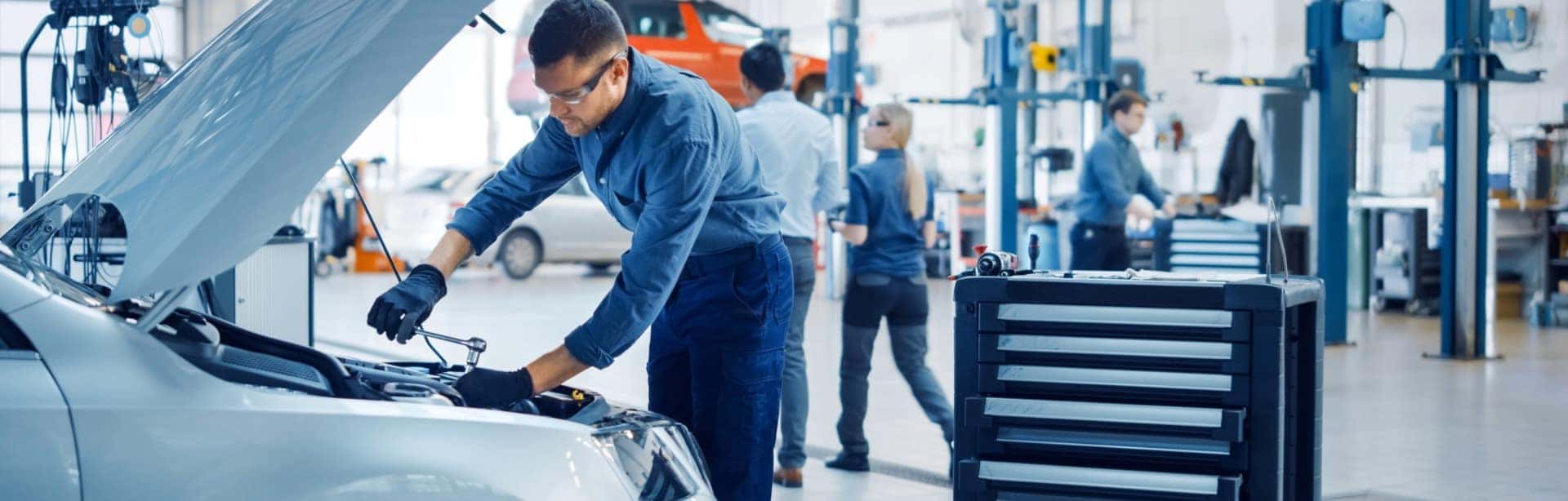
Living in Canandaigua means dealing with a four-season climate that is notoriously tough on machinery. From the deep freeze of February to the humid heat of July, your Toyota needs proactive care to handle the swings in temperature and road conditions.
What Does “Winterizing” Mean for Rochester Area Drivers?
Winter here is not just cold; it is chemically aggressive. The Department of Transportation uses a mix of salt and liquid brine to keep roads safe, but that same mixture is the enemy of your vehicle’s undercarriage.
Battery Cold Cranking Amps: Chemical reactions slow down in the cold. A battery that works fine in September might fail completely on a zero-degree morning in January. We test the “Cold Cranking Amps” (CCA) to ensure your car starts when you need it most.
Tire Rubber Compounds: All-season tires begin to harden and lose grip when temperatures drop below 45 degrees. We often recommend switching to dedicated winter tires for drivers in hilly areas like Bristol or South Bristol. These tires use specialized rubber that stays flexible in freezing temps, biting into ice and snow for superior safety.
Wiper Blades and Fluid: Heavy, wet lake-effect snow can destroy flimsy wiper blades in minutes. We install beam-style blades that resist ice buildup and fill your reservoir with low-temperature fluid that won’t freeze on your windshield while driving down Route 5 & 20.
Brake Cleaning: Slush and salt can get trapped in your brake calipers, causing pins to seize and pads to wear unevenly. A mid-winter inspection and cleaning can prevent premature brake failure.
How Does Summer Heat Affect Your Vehicle?
While we focus heavily on winter, Upstate summers can be surprisingly punishing. Humidity and heat stress different systems.
Cooling System Stress: Sitting in traffic on I-490 during road construction season puts immense strain on your radiator and water pump. If your coolant is old or the ratio is wrong, your engine can overheat quickly. We verify the pH balance and freezing/boiling point of your coolant.
Air Conditioning Efficiency: You need your A/C to dehumidify the cabin as much as cool it. If your system is low on refrigerant, the compressor works overtime, burning more fuel and wearing out faster.
Pavement Heat and Tires: Hot asphalt increases tire pressure. An overinflated tire has a smaller contact patch with the road, reducing traction and causing the center of the tread to wear out prematurely. We adjust pressures to match ambient temperatures.
Certified vs. Independent: What is the Real Difference?
Many drivers in Brighton and Victor ask if they should just go to the local garage down the street. While there are capable mechanics everywhere, the gap in capabilities widens every year as cars become more advanced.
What is the “Toyota Techstream” Advantage?
Independent shops typically use generic OBD-II scanners. These tools can read basic “Check Engine” codes, but they often cannot see the proprietary data streams of a modern Toyota.
Deep-Dive Diagnostics: Our Techstream computers talk to every control module in your car—from the transmission controller to the body control module. We can see live data on hybrid battery cell voltages or fuel trim adjustments that generic scanners miss.
Software Updates: Just like your phone, your car’s computer needs occasional updates to fix bugs or improve performance. Only a certified dealer can download and install these official Toyota software patches.
The Breakdown: Dealership vs. General Shop
| Feature | Certified Toyota Center | General Local Mechanic |
|---|---|---|
| Technician Training | Factory-Certified: specialized, ongoing training on Toyota hybrids, EVs, and safety systems. | Generalist: broad knowledge of many makes, but lacks deep expertise in Toyota specific tech. |
| Parts Source | Genuine OEM: Guaranteed fit, finish, and rust resistance. Includes national warranty. | Aftermarket/White Box: Variable quality. May not fit perfectly or resist corrosion as well. |
| Diagnostic Tools | Proprietary Techstream: Full access to all vehicle modules, sensors, and software updates. | Generic Scanners: Limited access. Can read codes but often cannot program new modules or keys. |
| Recall Management | Automatic & Free: We check for and perform safety recalls at no cost during every visit. | Unavailable: Independent shops cannot perform warranty recall work or check the official database. |
| Service Records | National Database: Visits are logged permanently in the Toyota system, boosting resale value. | Local Paperwork: Records are often stuck in a local filing cabinet and don’t transfer if you move. |
How to Spot a “WOW” Service Experience
Not all dealerships are created equal. You want a partner who respects your time and intelligence. Here is what you should look for when choosing a service home in the Canandaigua area.
What are the Signs of a Customer-First Facility?
Clear Communication: You should never have to guess what is happening with your car. The best advisors send text updates with photos or videos of the problem areas so you can see exactly what needs fixing.
Detailed Estimates: You should receive a line-by-line quote before any work begins. If a shop gives you a vague “ballpark” figure, be wary.
Respect for Your Time: Look for online scheduling that actually works, quick check-in processes, and comfortable waiting areas with Wi-Fi so you can keep working while you wait.
Community Roots: A dealership that supports local charities and events is invested in the community. They aren’t just here to make a buck; they are your neighbors.
What Should Be Warning Signs?
Upselling Without Proof: If an advisor recommends a flush or a part replacement but can’t show you why it’s needed (dirty fluid, worn part), ask for clarification.
Dirty Shop Floor: A messy workshop often reflects messy work habits. Professional technicians take pride in a clean, organized environment.
Invisibility: If you can’t see the service bay or if they refuse to let you see your old parts, transparency is lacking.
Essential Services for the 2026 Toyota Lineup
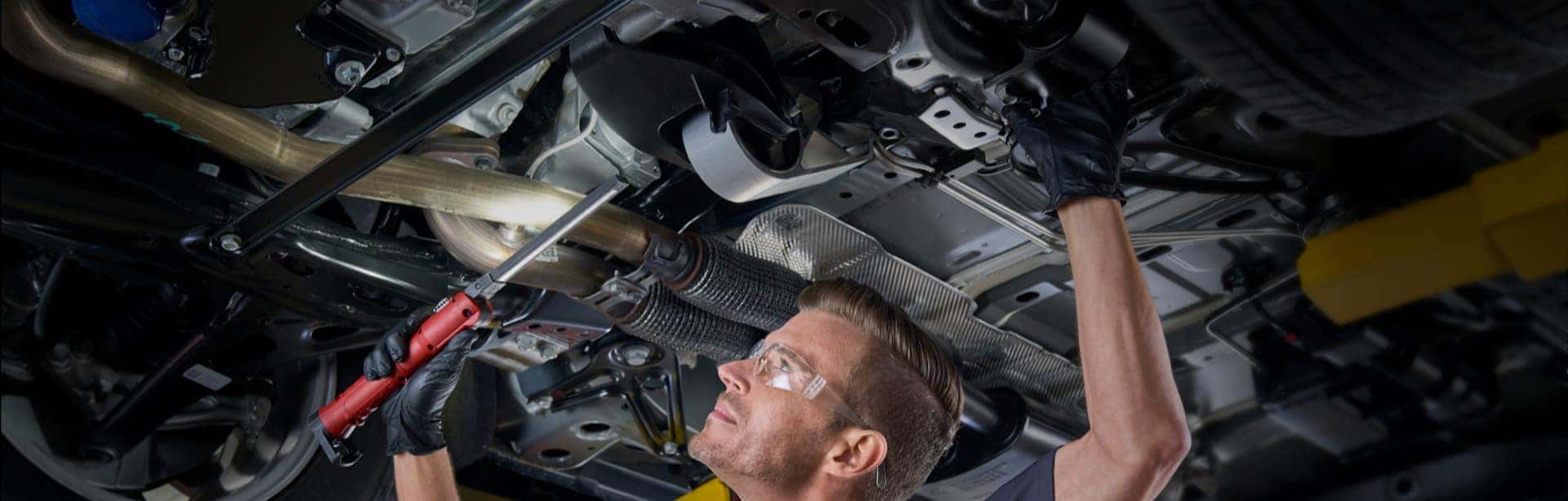
As we welcome the 2026 model year vehicles, maintenance has evolved. It’s no longer just about spark plugs and belts.
Hybrid and EV Battery Health
For owners of the 2026 Prius or bZ4X, the battery is the heart of the car.
Filter Cleaning: Hybrid batteries have air intake filters that can get clogged with dog hair or dust. Keeping these clean keeps the battery cool and extends its life.
Voltage Testing: We monitor individual cell blocks to catch weak points before they trigger a system failure.
Advanced Driver Assistance Systems (ADAS)
The 2026 models come equipped with sophisticated safety tech.
Camera Cleaning and Calibration: The cameras behind your rearview mirror govern your lane-keeping assist. If these lenses get dirty or knocked out of alignment, the system disables itself.
Radar Alignment: The sensor in your grille controls your adaptive cruise control. Even a minor bump can misalign it, causing the car to brake unexpectedly or fail to detect traffic.
Fluid Dynamics
0W-16 and 0W-8 Oil: newer engines use incredibly thin synthetic oils to maximize fuel efficiency. Using the wrong viscosity oil from a generic bulk tank can reduce your MPG and potentially damage the engine’s variable valve timing components.
Inverter Coolant: Hybrids have a separate cooling loop for the high-voltage electronics. This fluid must be changed at specific intervals to prevent the inverter from overheating—a very expensive repair.
Questions Every Driver Should Ask Their Service Advisor
Empower yourself by asking the right questions before handing over your keys. A confident advisor will be happy to answer them.
“Are the technicians working on my car factory-certified for this specific model?”
You want to know if the person touching your specialized hybrid has actually been trained on it.
“Will you be using Genuine Toyota parts for this repair?”
Always verify this. If they say “we use OEM-equivalent,” that usually means aftermarket. Insist on Genuine Toyota.
“Is there any open recall or service campaign on my VIN?”
This should be standard procedure, but it never hurts to double-check.
“Can you provide a printout of the battery health test?”
Don’t just take a “it’s fine” for an answer. Ask for the slip showing the voltage and CCA reading.
“Is this service reported to Carfax or the Toyota National Database?”
Ensure your responsible maintenance habits are being recorded for future resale value.
“Do you offer a shuttle to downtown Canandaigua or Rochester while I wait?”
Logistics matter. Know your options for getting around while your car is in the shop.
Frequently Asked Questions (FAQs)
What is the best way to protect my Toyota from rust in Upstate NY?
The most effective defense is a combination of regular washing and professional inspections. During the winter months, try to wash your vehicle weekly, specifically using a car wash that offers an undercarriage spray to rinse away salt and brine. Additionally, ask your service advisor about inspecting the underbody coating during every oil change to catch any scrapes or exposed metal before rust takes hold.
Do I really need winter tires for driving in Canandaigua and Rochester?
While all-season tires are adequate for dry and wet roads, they struggle significantly in the freezing temperatures and deep snow common to our region. Winter tires use a specialized rubber compound that stays soft and flexible below 45 degrees, providing critical grip on icy roads like Route 332 or hilly terrain near the lakes. For maximum safety during a relentless New York winter, they are highly recommended.
How does the Start-Stop technology on my new Toyota affect the battery?
The automatic Start-Stop system, designed to save fuel at traffic lights, does place a higher demand on your battery compared to older vehicles. However, Toyota equips these models with enhanced Absorbent Glass Mat (AGM) or EFB batteries designed to handle frequent cycling. It is vital to have these batteries tested regularly by a certified technician, as a standard generic battery cannot support this technology and will fail prematurely.
Why is my tire pressure light always coming on during the fall and winter?
This is a common phenomenon in the Finger Lakes region known as Gay-Lussac’s Law. For every 10-degree drop in ambient temperature, your tire pressure decreases by about 1 PSI. When we have those sharp temperature drops in October and November, your tires can lose enough pressure overnight to trigger the warning light. It doesn’t necessarily mean you have a puncture, but you should visit the dealership to have them inflated to the correct winter specification.

About West Herr Toyota of Canandaigua
West Herr Toyota of Canandaigua is proud to be a
trusted automotive partner for drivers across the Finger Lakes region. Our dealership operates with a
philosophy of absolute integrity, striving to make every service visit transparent, efficient, and
comfortable for our neighbors. Whether you are a long-time resident or new to the area, we invite you to
experience a higher standard of vehicle care backed by the expertise and community focus of the West Herr
family. For more information on reliable vehicle data and safety ratings, we recommend visiting Consumer Reports,
Edmunds, and the NHTSA. You can also explore the official Toyota homepage for the latest model news.
Related Articles:
Choosing Your Canandaigua Toyota Partner: A Guide for Local Drivers
0 comment(s) so far on The Upstate Owner’s Handbook: Mastering Toyota Maintenance in Canandaigua and Rochester